Findings from the Wharton Baker Retailing Center & The Verde Group Consumer Loyalty Study, April 2021
Companies strive to build customer loyalty to increase market share. To accomplish this, they invest in several areas including pricing, promotion, product assortment, digital channels, logistics, and operations. They also invest billions in loyalty programs to identify customer needs and reward consumers for profitable shifts in their behavior.
However, with billions being spent in loyalty management, questions remain. Are there diminishing returns to loyalty investments? Do they improve the customer experience? Can loyalty programs truly inoculate retailers from the damage caused when problems occur?
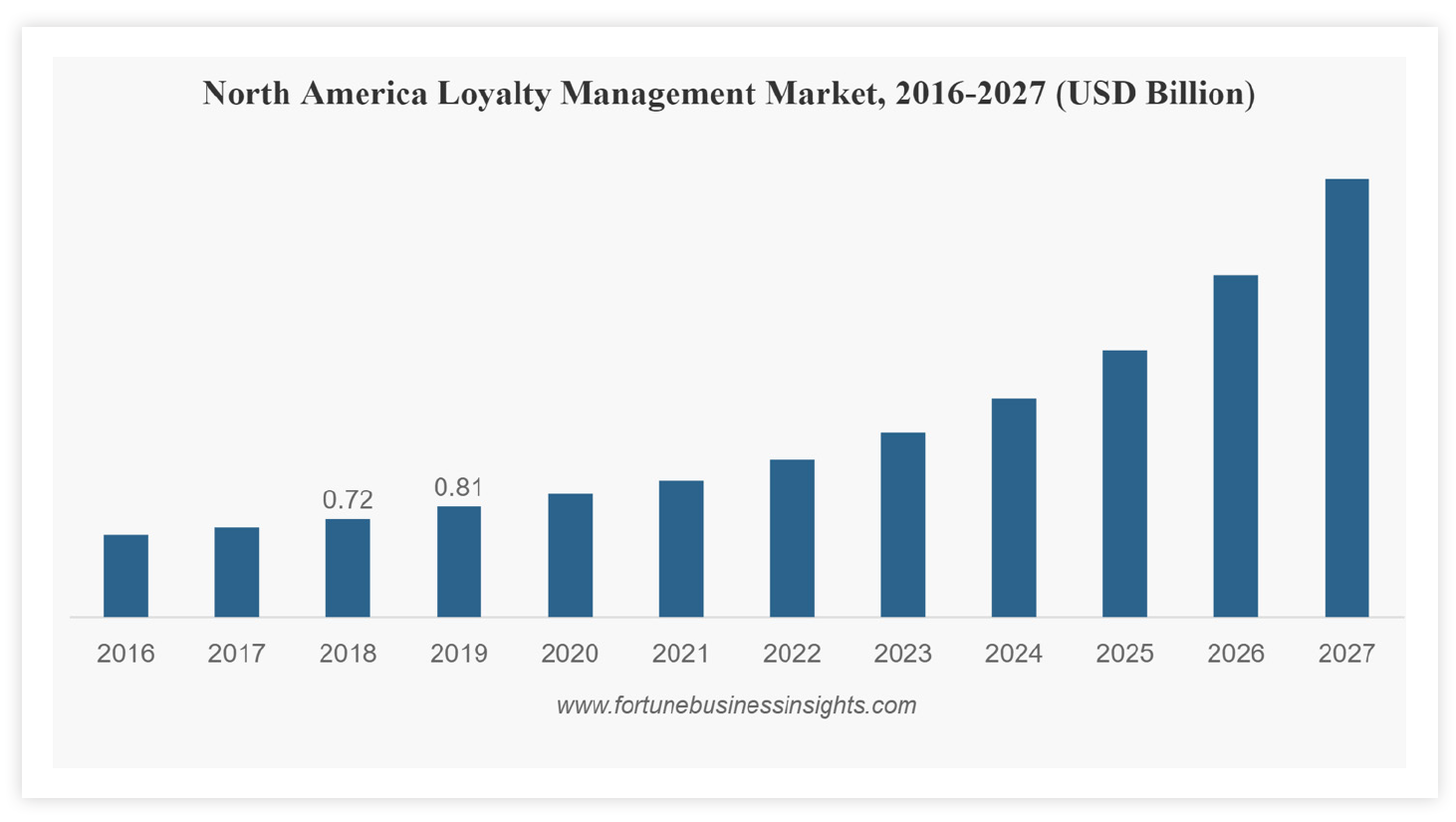
(Editor’s note: These figures reflect projections available at the time of the study. Fortune Business Insights has since revised its outlook substantially upward—its current report values the global loyalty management market at USD 15.19 billion in 2025, projected to reach USD 51.65 billion by 2034.)
The Wharton Baker Retailing Center and The Verde Group study set out to address these key questions. Our goal was simple: understand to what degree, if any, loyalty programs can inoculate retailers from the harm caused by problems encountered in the customer experience.
About the Study
In May 2020, The Baker Retailing Center at the Wharton School and The Verde Group conducted an online study of 2,535 US consumers about their most recent retail purchase experience, regardless of channel. The sample naturally reflected the US population distribution in terms of region, age, and gender, with a focus on specialty retail, mass merchandisers, department stores, and category killer retailers. Respondents were asked whether they experienced specific problems, whether they were members of the retailer’s loyalty program, and which benefits they used. Differences between program members and non-members were tested for statistical significance (95% confidence interval).
The study explored:
- The difference between frequent problems and those that cause the greatest damage to the brand
- The impact on repurchase intent if shoppers contacted a retailer and were completely satisfied with problem resolution
- The benefits used by shoppers actively participating in a brand’s loyalty program
- The degree of inoculation realized by retailers when damaging problems occurred and the shopper was actively participating in the brand’s loyalty program
The results were surprising…
Not All Problems Are Created Equal
It’s inevitable. In the complex world of customer experience delivery, problems will occur. Customers may even let you know about the issues they’ve experienced. But not all problems are created equal — frequency does not equal importance. Here’s why.
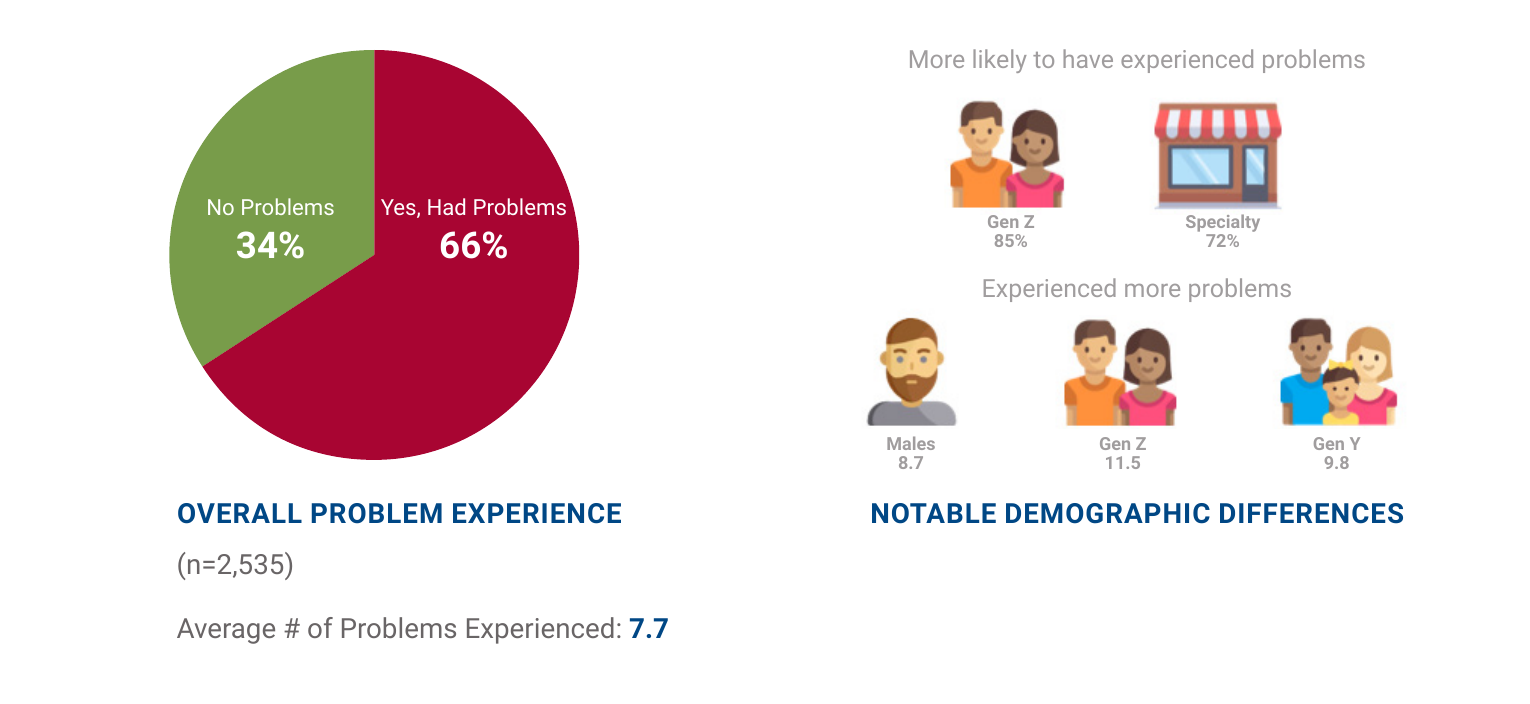
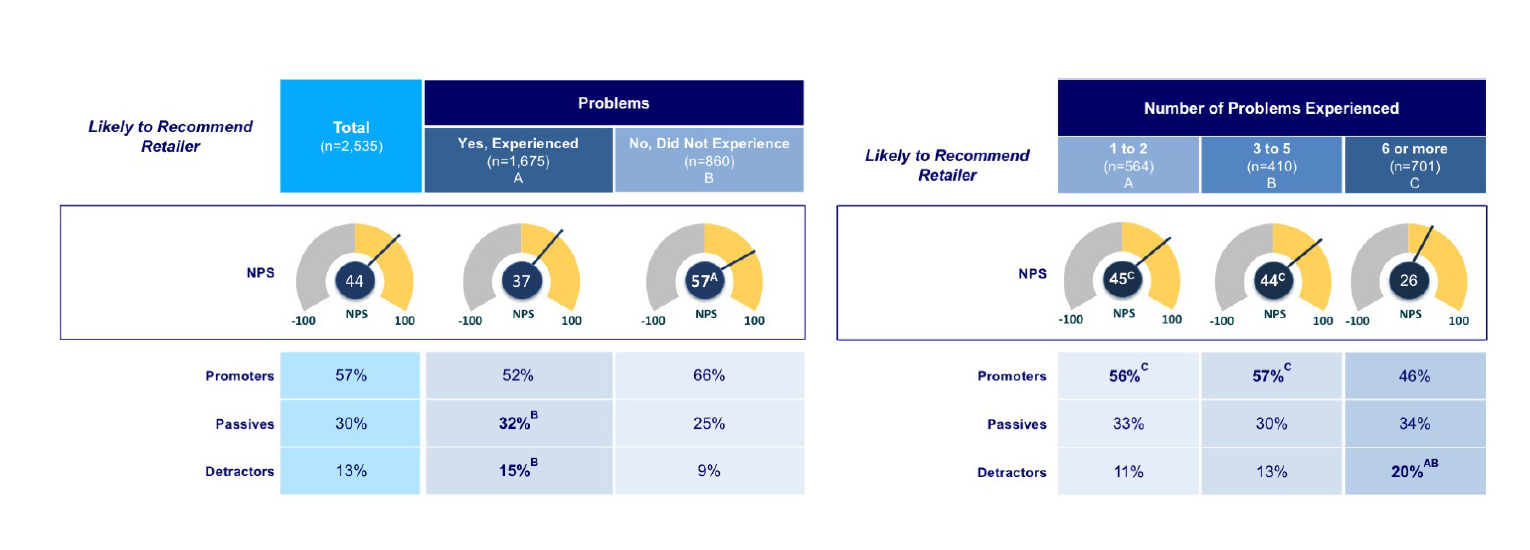
Each day, more than half of customers experience problems during their shopping journey — 66% of shoppers in our study encountered at least one, averaging 7.7 problems each. Younger shoppers experienced the most. Friction in the shopping journey reduces customer loyalty: shoppers who have problems are 35% less loyal than those who are problem-free.
Problem experiences tend to be highest during the pre-purchase phase of the shopping journey — and notably, loyalty program members encounter more issues regardless of stage. Channel confusion, product availability, and overall communication were cited most frequently by loyalty program members.
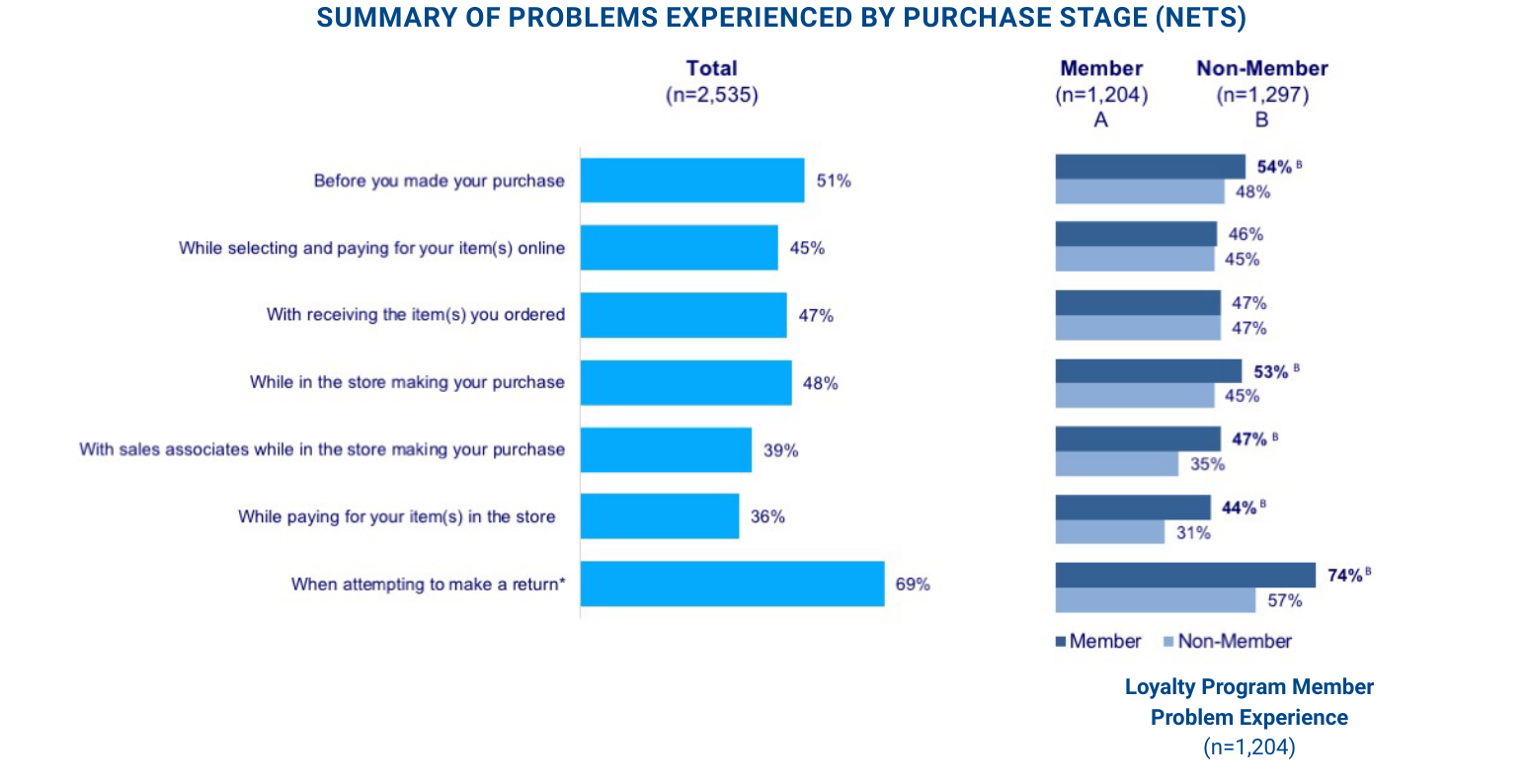
But should retailers focus on solving problems simply based on their frequency? The answer is a resounding no. A frequently experienced problem may have little influence on customer loyalty while, conversely, a low-frequency problem can create tremendous loyalty damage. To assess impact, we looked at the extent to which each problem affects customer loyalty as measured by NPS, then performed advanced statistical analysis to isolate the unique damage associated with each problem — yielding a Loyalty Damage Impact score.
The contrast between the two rankings is striking:
Top 10 Most Loyalty-Damaging Problems
- You purchased an item online and had to pay for shipping to return it
- The website/app was difficult to navigate
- You could not return the item without an original receipt
- The store atmosphere was unappealing (poor lighting, very noisy, bad smelling)
- The store was too messy or disorganized
- You were not given a refund, only a credit for future merchandise
- The return policy was unclear or confusing
- The product was not in stock at the store even though the retailer’s website indicated it was
- Sales associate could not help you locate the item you were looking for
- Sales associate did not treat you with courtesy and respect
Top 10 Most Frequent Problems
- The item you were looking for was not available in the store, only online
- The item you were looking for was not available online for pick-up
- The item was not available online for pick-up from a store close to you
- The item was not available online for delivery
- Information about stock availability was not online
- An item you were looking for was out of stock online
- The item was not available online, only in the store
- On the retailer’s website, it was not clear which items are available for delivery vs. pick-up
- On the retailer’s website, it was not clear which items are available online vs. in-store
- You could not specify the delivery date or time you wanted
Notice that the two lists share almost nothing in common: the problems customers encounter most often are largely availability issues, while the problems that do the most damage cluster around returns, store environment, and service.
Loyalty Program Benefits & Their Role in Driving Customer Engagement
Benefits, perks, rewards. Any way you say it, these terms describe the core value proposition of any loyalty scheme. But do these programs actually create “loyalty”? Understanding how loyalty benefit usage plays a role in shopper attitudes—and ultimately their behaviors—can help organizations prioritize investments.
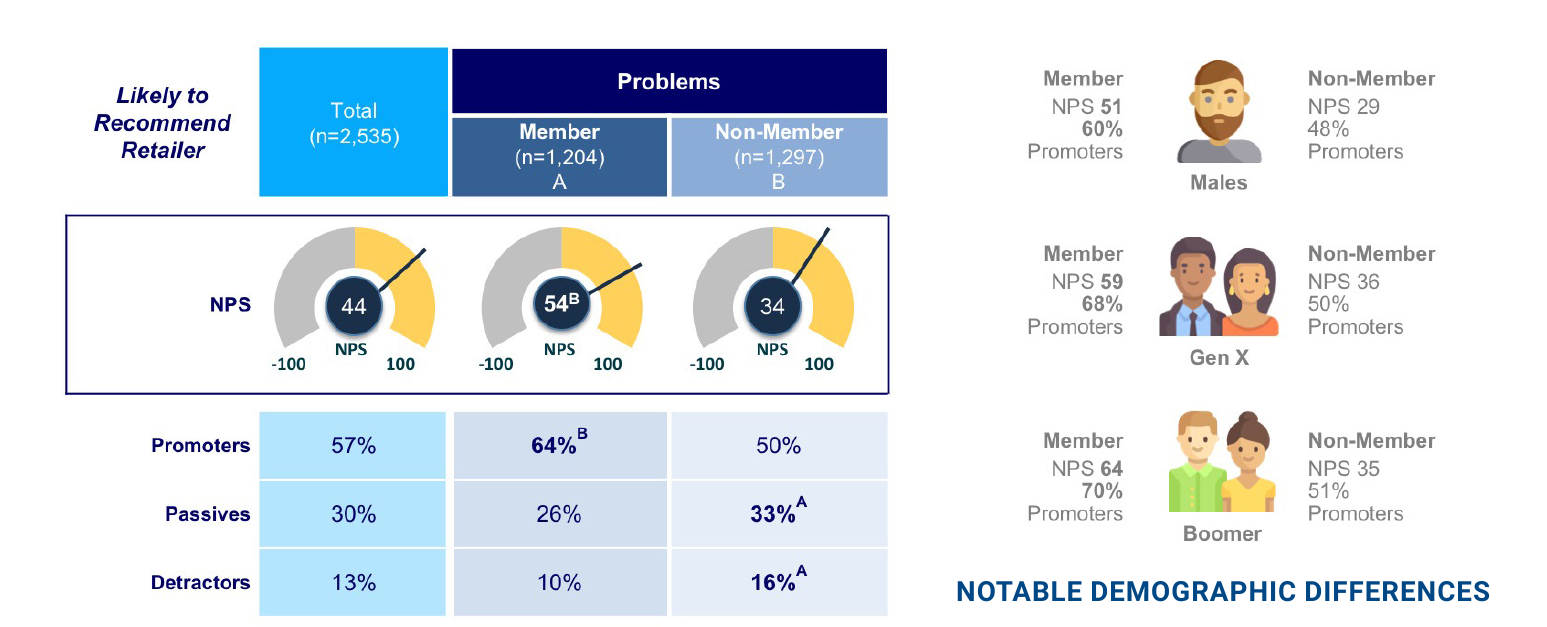
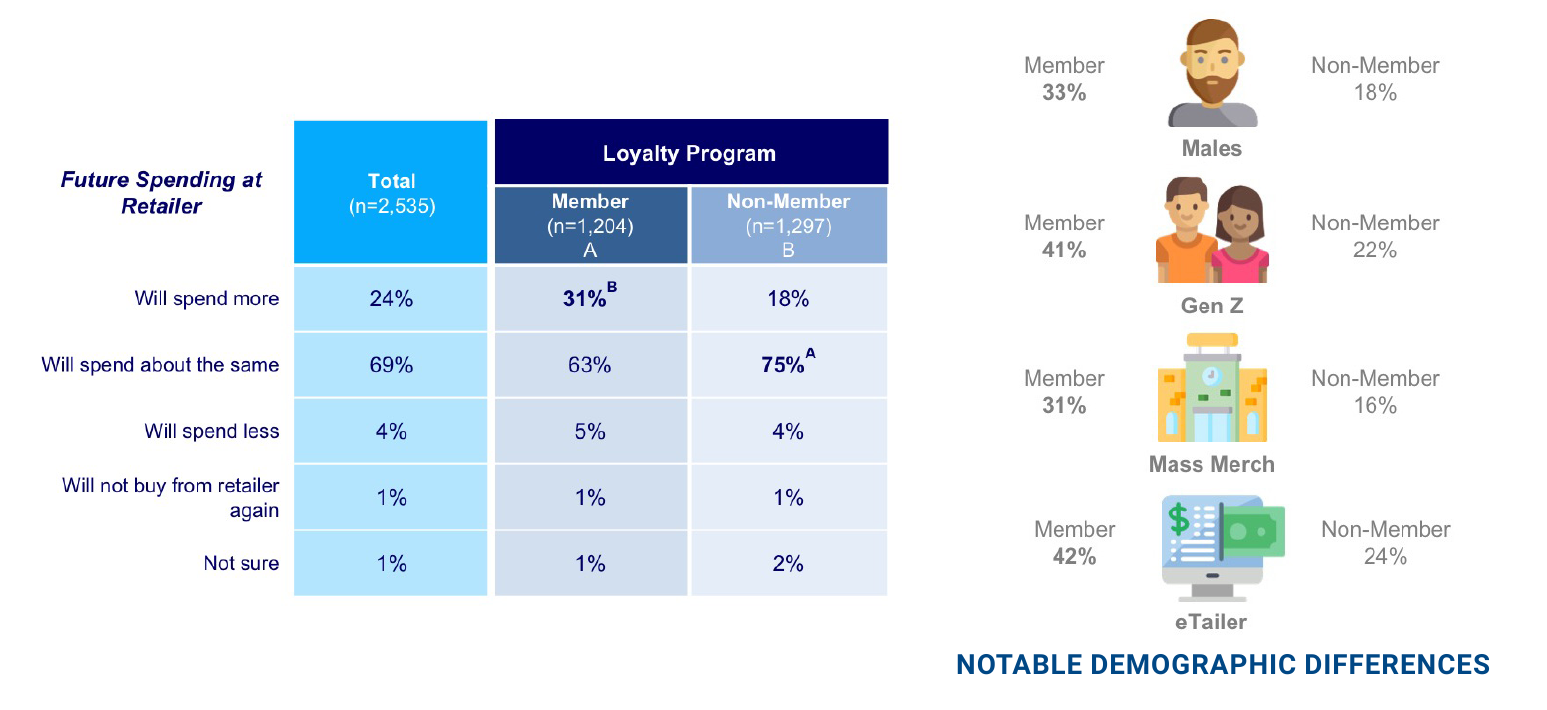
Loyalty program members were nearly 30% more likely to be Promoters than non-members. This suggests that a brand’s more engaged customers are likely those who have opted in to the loyalty program. Another marker is the member/non-member analysis, which suggests members will spend more than their counterparts not enrolled in the program. While the data supports this perspective—members plan to spend 2x more than non-members—it is dangerous to rely on this analysis, as higher-value customers are those who have likely enrolled in the program to begin with.
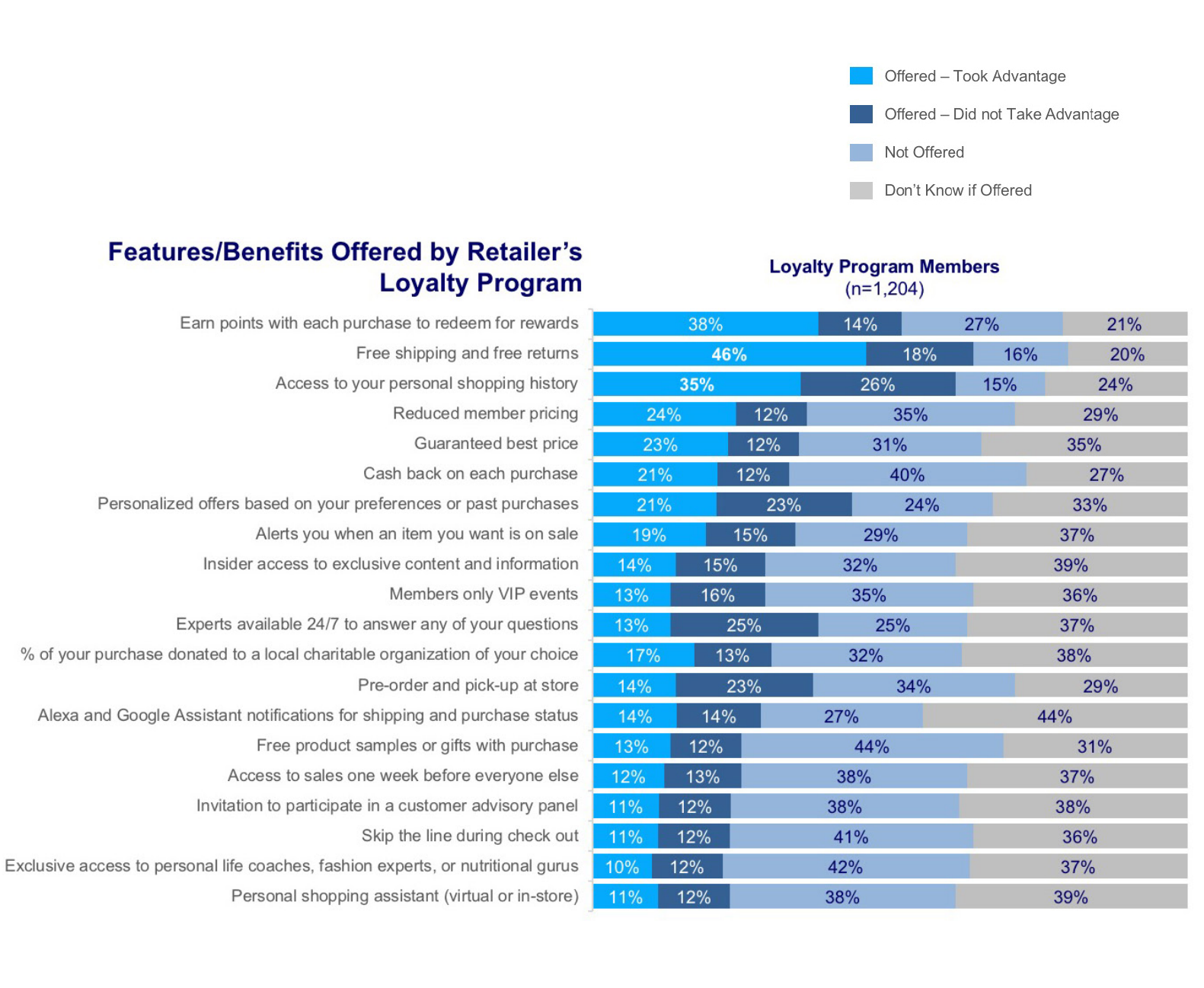
Loyalty programs come in many shapes and sizes. For our research, we explored a list of 20 benefits falling into three primary categories. While this list is not exhaustive, it reflects a range of experiential and monetary benefits, as well as elements of personalization.
EXPERIENTIAL
- Exclusive access to personal life coaches, fashion experts, or nutritional gurus
- Personal shopping assistant (virtual or in-store)
- Invitation to participate in a customer advisory panel
- Skip the line during checkout
- Free product samples or gifts with purchase
- Access to sales one week before everyone else
- Alexa and Google Assistant notifications for shipping and purchase status
- Percentage of your purchase donated to a local charitable organization of your choice
- Experts available 24/7 to answer any of your questions
- Members-only VIP events
- Pre-order and pick-up at store
- Insider access to exclusive content and information
EXPERIENTIAL + MONETARY
- Free shipping and free returns
- Access to your personal shopping history
- Reduced member pricing
- Guaranteed best price
- Alerts you when an item you want is on sale
- Personalized offers based on your preferences or past purchases
MONETARY
- Earn points with each purchase to redeem for rewards
- Cash back on each purchase
Earning points and free shipping are the most commonly offered and used features, which is not surprising since most retail programs rely on point schemes and free shipping to reward shoppers.
 The question remains: does usage of program benefits increase customer loyalty? Just like problems, loyalty program features impact loyalty differently. Some make customers stronger advocates — we call this “authentic” loyalty. Other benefits have negligible impact.
Seven benefits stood out statistically in their ability to create authentic loyalty — a customer connection to a brand based on trust and resiliency in the relationship. These benefits are not singularly focused (e.g., monetary) and vary significantly in their impact:
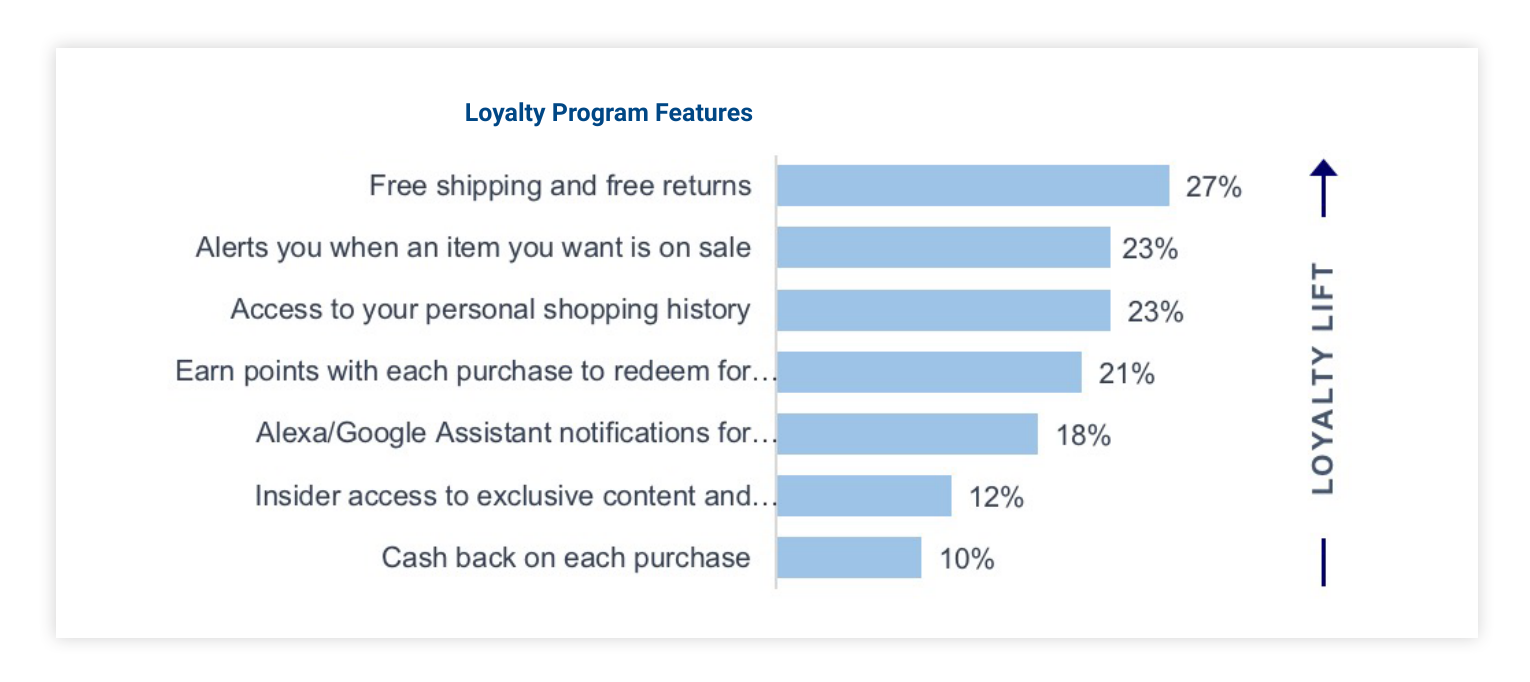
None of the other thirteen benefits tested—including reduced member pricing, guaranteed best price, VIP events, personalized offers, and personal shopping assistants—correlated with a lift in creating loyalty in the customer relationship.
So where is the risk? That is where the Boomerang Effect of Loyalty Programs comes into play.
The Boomerang Effect of Loyalty Programs
The core hypothesis of our study focused on the potential diminishing returns of loyalty program investments. What we found was surprising: loyalty programs can inoculate companies when problems occur—however, they can also amplify the damage caused when friction occurs. We call this the Boomerang Effect of loyalty programs.
Our research explored the intersection of the most damaging problems and the usage of loyalty benefits to see if retailers were inoculated when customer experience friction occurred. Does active participation in loyalty programs and usage of their benefits reduce the impact of problems?
The answer: yes and no.
Some loyalty features inoculate retailers against loyalty damage, but they can also accelerate it, depending on the problem experienced. Because some of these program features are more strongly associated with authentic loyalty, they can inoculate against friction—customers may tolerate certain problems depending on the loyalty feature they take advantage of. But there is also a boomerang effect: rather than inoculating the retailer from damage created by friction, some loyalty program features can act as accelerants to loyalty damage.
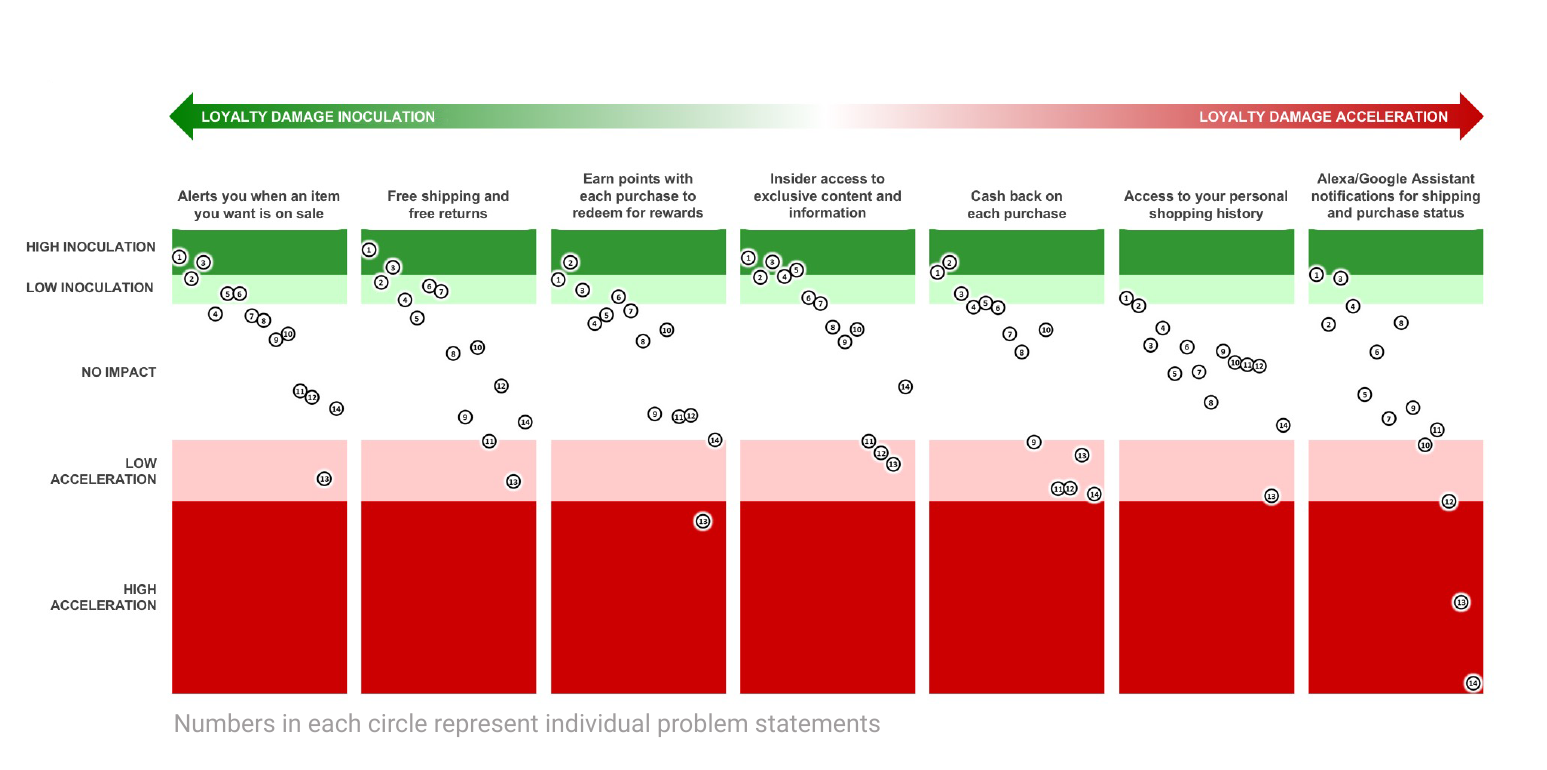
Our interpretation of the Boomerang Effect is simple: loyalty program members have higher expectations of their favorite brands. When problems occur, they expect to be treated differently based on their loyalty and value. But this is not always the case. Why? According to an eMarketer study, consistently managing the customer experience in an omni-channel environment remains a challenge for brands. This, we believe, increases the likelihood of inconsistent treatment of high-value customers enrolled in loyalty programs — thus contributing to the Boomerang Effect.
→ A May 2019 eMarketer study found that only 3% of marketers claim to have all channels integrated to provide a cohesive, personalized experience from one channel to the next. As a result, a loyalty program is often a separate initiative, managed independently and within its own channel.
Potential Implications
Viewing “loyalty” as a program is fraught with unforeseen pitfalls. Approaching “loyalty” as a strategy to engage your customers, inform your enterprise, and ultimately increase market share can be a winning solution under the right set of circumstances. Four points to consider:
- Understand which problems are associated with serious economic damage. The research shows that the most frequently experienced problems are not necessarily the most damaging problems. Customers may forgive stockouts, but may not be forgiving when the company repeatedly asks for information (such as an email address) that the customer believes the firm already has because they are a loyalty program member.
- Understand if certain benefits in the design of a loyalty program could have an inoculation effect. Of the 20 loyalty program benefits studied, seven could provide some degree of inoculation. If the retailer can deliver on these benefits — such as free shipping and alerts for items going on sale — then damage could be contained when problems occur.
- Recognize that friction in the purchase process is inevitable for some percentage of transactions. While retailers try to minimize problems, the reality is that they may occasionally occur. The key to success here is effective problem resolution: in 80% of cases, when a retailer resolves a problem effectively, the “lapse” is forgiven and loyalty remains. Conversely, if problem resolution is incomplete or takes too long, consumers will punish the firm going forward.
- Loyalty programs need to be integrated with operational policies to mitigate economic damage. The economic damage caused by non-customer-focused return policies — such as requiring a receipt for returned goods or requiring customers to pay for shipping to return items — are just two examples of where a loyalty program can be integrated into operational policies to maximize authentic loyalty and drive repeat purchases.
—
The Consumer Loyalty Study was conducted by the Jay H. Baker Retailing Center at the Wharton School and The Verde Group. To learn more, contact The Verde Group.